

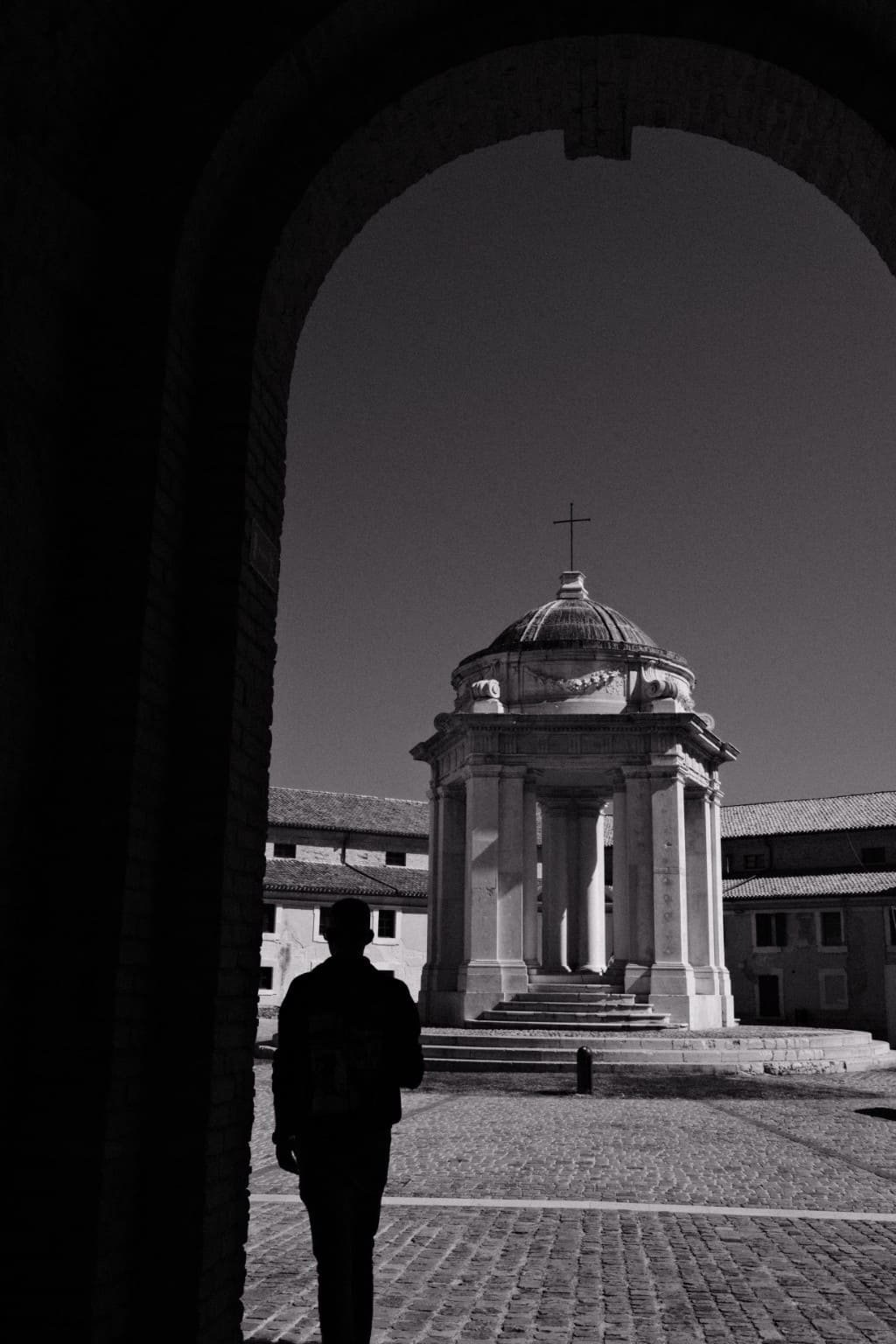
There is a particular kind of photograph that does not simply record a place but decides, quietly and deliberately, what the viewer is allowed to see. In the black-and-white work of Antonio Rana, an Italian photographer, this decision belongs almost entirely to light. A doorway half in shadow, a staircase catching a single diagonal beam, a figure crossing a street just as the sun clears a rooftop these are the moments Rana waits for, and they form the foundation of a visual language he has been building for less than a year.
A Late Beginning, A Fast Education
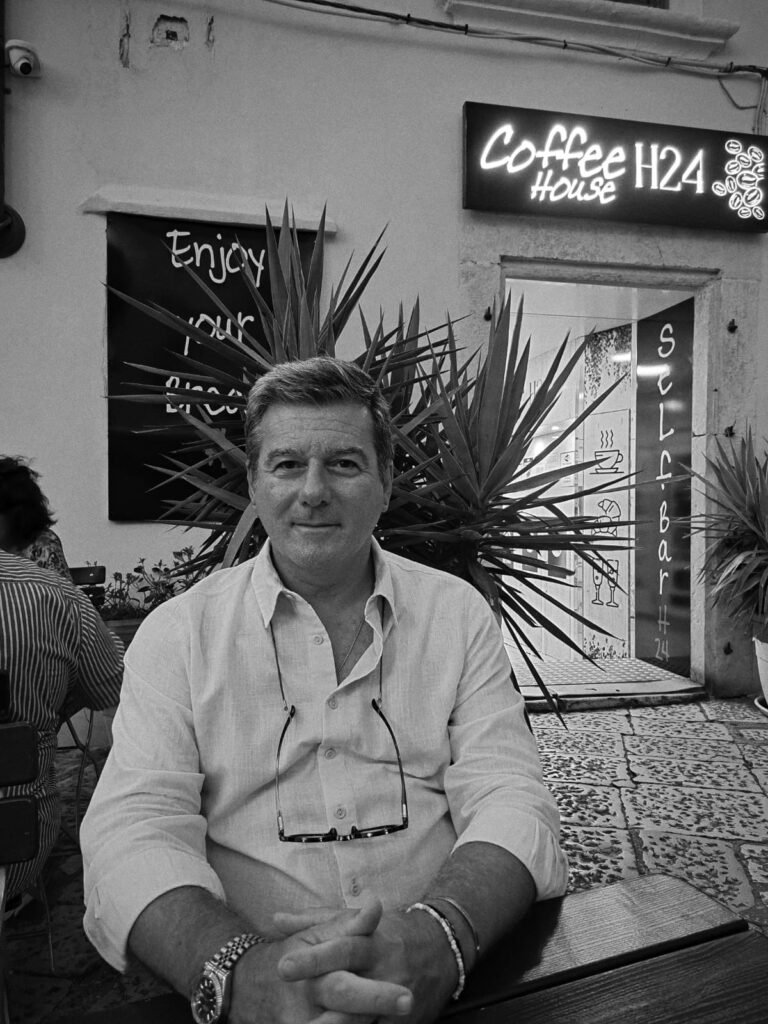
Rana is self-taught, and his story as a photographer is a short one by conventional standards. He picked up the practice in 2025, roughly eight months ago, without formal training, without an academy behind him, without the slow scaffolding that usually shapes a photographic career. What he built instead was a personal research project rooted in observation: looking closely at streets, buildings, and the people who pass through them, and asking what happens when those ordinary subjects are rendered in black and white, stripped of the distraction of color.
That stripping-down is not incidental. For Rana, monochrome is not a stylistic filter applied after the fact but a way of thinking before the shutter is even pressed. Removing color forces attention onto structure, onto the geometry of a wall or the curve of an arch, and onto the behavior of light itself how it falls, where it stops, what it leaves untouched.
Echoes of Humanist Photography and Neorealism
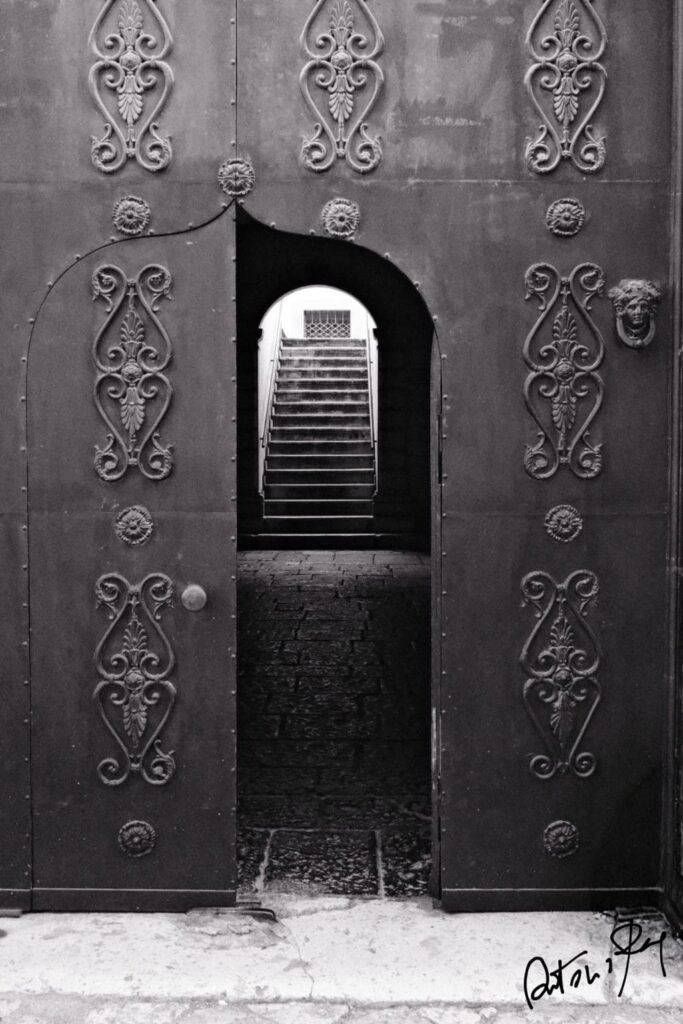
It is difficult to look at Rana’s images without thinking of the broader traditions of humanist photography and neorealism, currents that have long valued the dignity of ordinary life and the honesty of the unposed moment. Rana’s work sits comfortably within that lineage, favoring authenticity over spectacle and observation over intervention. His street scenes, his architectural studies, his portraits of place are not staged; they are found, waited for, and framed with restraint. The camera does not impose a narrative on reality so much as recognize one that is already unfolding.
The Monograph: Ninety Images, One Argument
The first major milestone in Rana’s short career was the publication of a photographic monograph containing ninety black-and-white photographs. More than a portfolio, the monograph functions as an argument a sustained demonstration of how far a single visual idea, built on light and shadow, can travel across ninety different subjects and settings. Working through that volume of material forced a kind of consistency into Rana’s eye, and it was in the aftermath of this project that his photography began to sharpen into something more distinctive.
The Theatrical Composition
Something changed after the monograph. Rana’s images began to draw a firmer line between light and shadow, between what is revealed and what is withheld, between documentation and interpretation. This shift can be described as a theatrical composition: the photographic scene behaves like a stage, where light functions as the spotlight and shadow as the curtain, illuminating only what deserves to be observed while everything else recedes into darkness.
In these photographs, shadow is not an absence but a device it builds depth, suggests mystery, and creates anticipation, much like the darkened wings of a theater from which a performer is about to step. Light, in turn, reveals architecture, doorways, staircases, and human figures, turning them into protagonists of a silent performance staged not by Rana but discovered by him within reality itself. A door, an arch, a set of worn stone steps: each can enter the frame as though walking onto a set, though nothing has been arranged. The theater exists already, in the way sunlight moves across a village square in the late afternoon; Rana’s contribution is to notice it and to compose around it. As he seems to understand instinctively, it is not the light that erases the shadow, nor the shadow that cancels the light it is the tension between the two that carries the story forward.
Gargano as a Photographic Territory
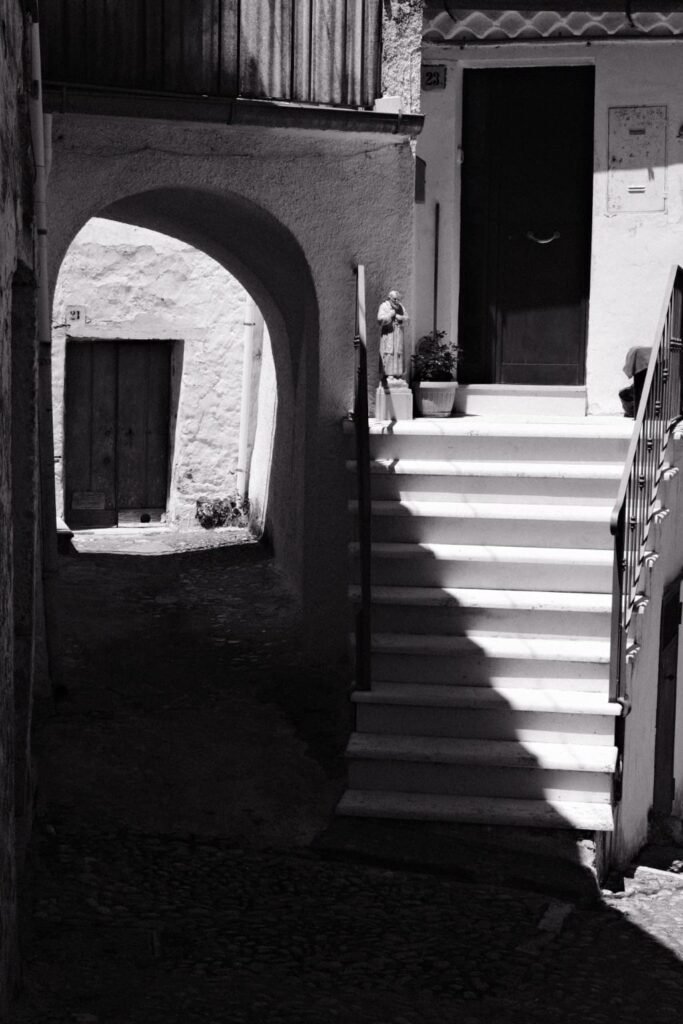
Following the monograph, Rana turned his attention to Gargano, in Italy, developing reportages and audiovisual projects centered on its villages and their human, architectural, and landscape heritage. Gargano offered fertile ground for the theatrical sensibility he had been refining: narrow streets that funnel light into blades, stone facades that hold shadow like memory, and communities whose daily rhythms provide the human presence his frames have always needed.
This body of work coalesces in the project Visual Journey – The Gargano Through Light, which stands as a synthesis of Rana’s research so far. Here, the villages of Gargano are not treated as postcard subjects but as components of a larger visual narrative, one where architecture and human presence are given equal weight, where stillness and movement coexist within the same frame, and where a street or a doorway can hold as much narrative charge as a portrait. Place, in this project, becomes inseparable from memory the photographs suggest not only what a village looks like but what it feels like to have lived inside its light for generations.
Interpretation, Not Just Documentation
What distinguishes Rana’s Gargano work from straightforward documentary photography is this persistent double movement between recording and interpreting. The villages are real, their streets and stairways and doorways genuinely photographed, yet the images never settle into pure reportage. Perception is allowed to shape the frame as much as fact does. A wall is a wall, but it is also a surface for light to perform on; a passerby is a resident of the village, but also a figure entering a composition that has been quietly waiting for them.
A Practice Still Taking Shape
Eight months is a short span for any artistic practice, and Rana’s is clearly still evolving. But the trajectory is already legible: from an early curiosity about light and shadow, through the discipline of assembling ninety photographs into a coherent monograph, to a theatrical sensibility now being tested against the villages of Gargano. What holds the work together is not technique for its own sake but a conviction that photography, done honestly, can hold documentation and interpretation in the same frame and that reality, observed patiently enough, tends to arrange itself like a stage.
Follow Antonio Rana on Instagram: @anto19682